Hair after 50
The beauty industry will never tell you this about thin, dry hair. A hairdresser of 30 years will.
If your ends still feel like straw… read this before you buy anything else for them, or cut it short.
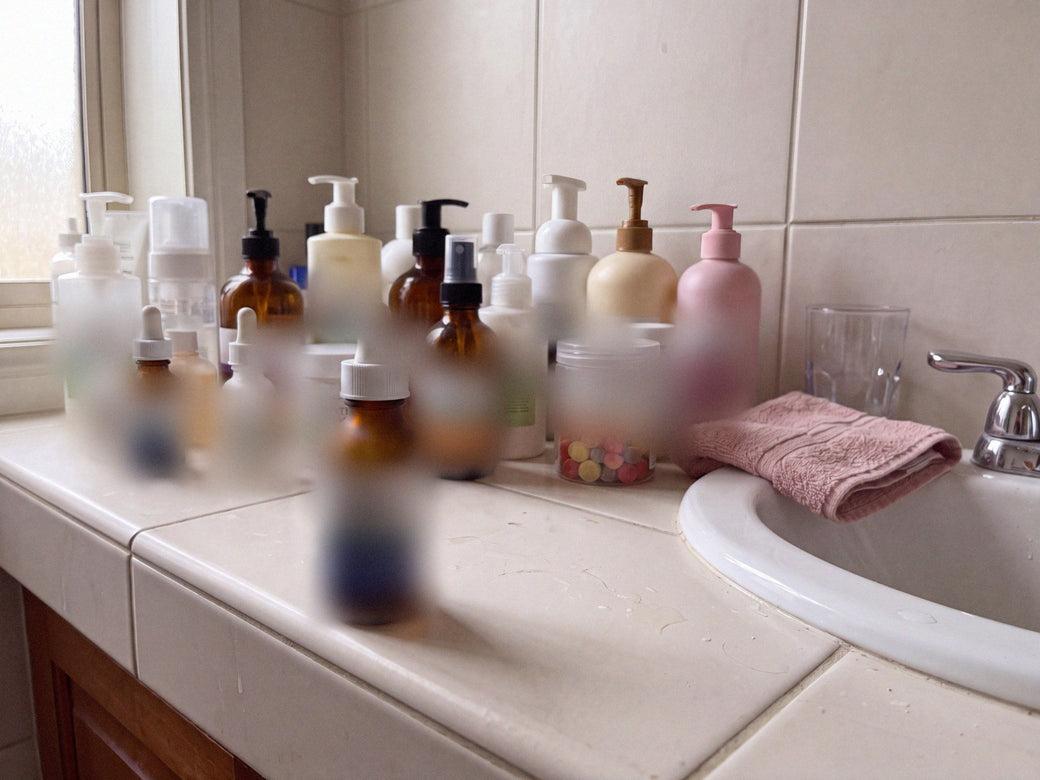
Count the bottles in your bathroom. Every one promised soft ends. The answer was never going to come in a bottle. It’s sitting right next to you.
I cut hair for a living, and these days my chair is full of women over 50. I talk and I listen, and after that many years, you know who still has great hair and who doesn’t, and what they do differently.
The same problem, over and over
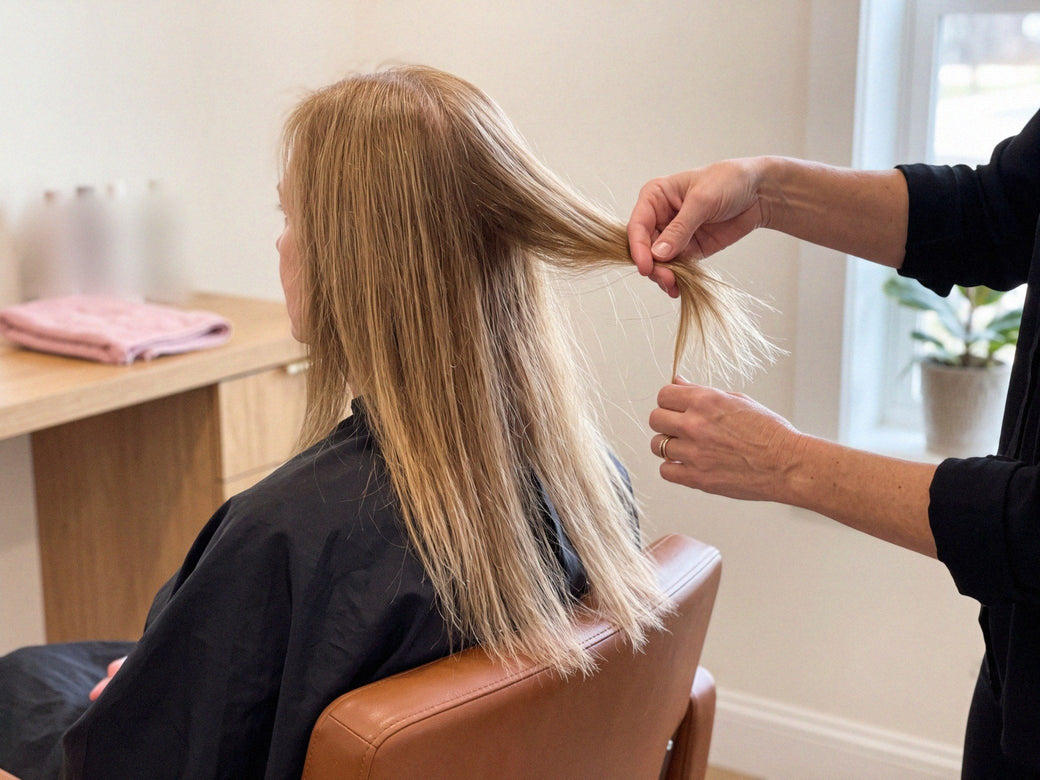
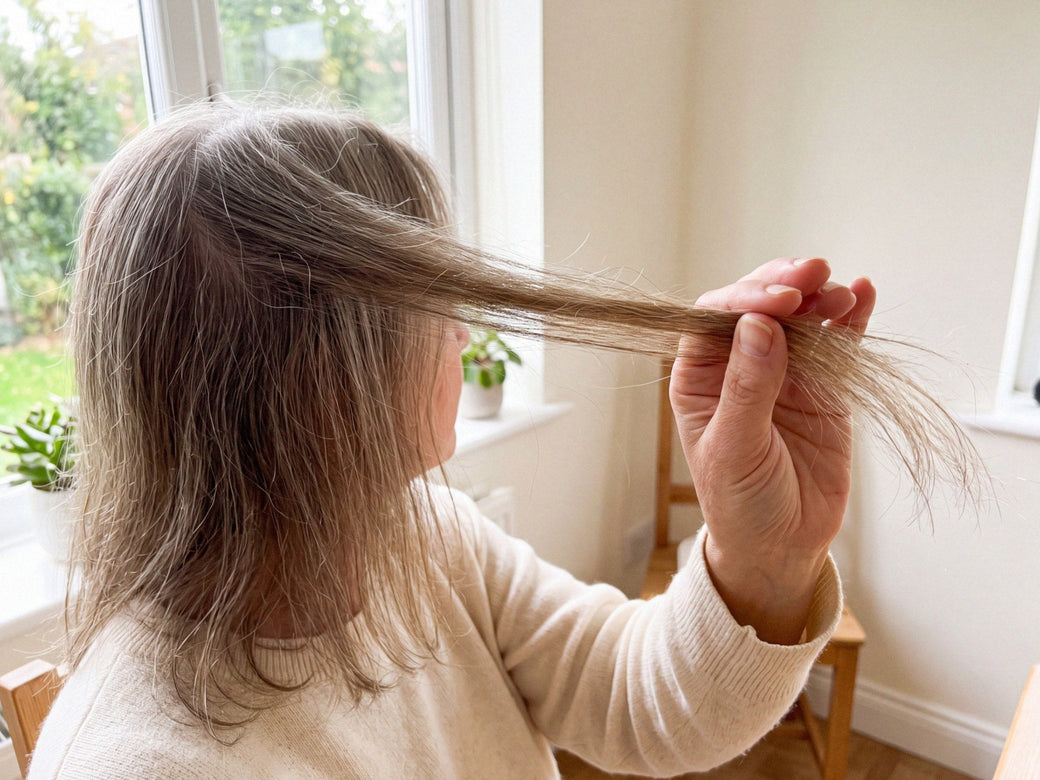
For years, I saw the same thing. A woman would sit down, lift her hair and show me the ends. Dry. Rough. Like straw.
She had tried everything on the shelf. She had done everything right, and her hair still felt worse every year.
Sooner or later, she would ask me: “Should I just cut it short?”
I could trim the ends. But a few months later she was back with the same problem. So why wasn’t anything working?
So I started asking questions
I asked every client with dry ends about her routine. Nothing lined up.
Then one day, almost by accident, I asked: “What brush do you use?”
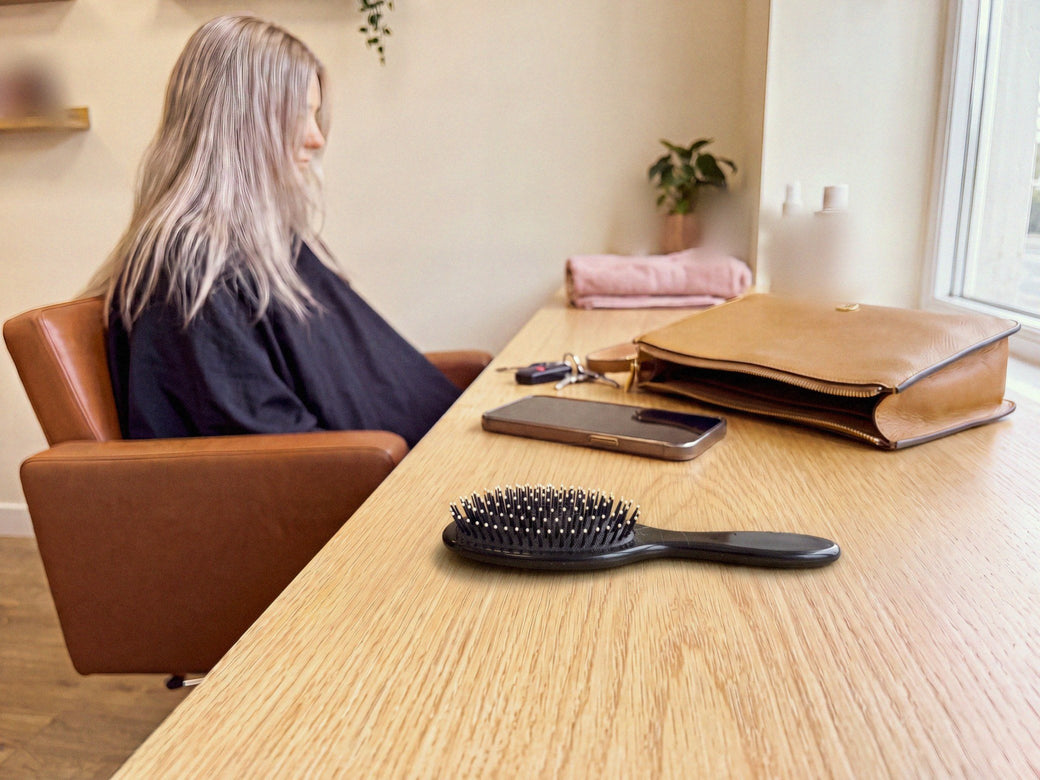
She said she used a regular drugstore brush with plastic pins.
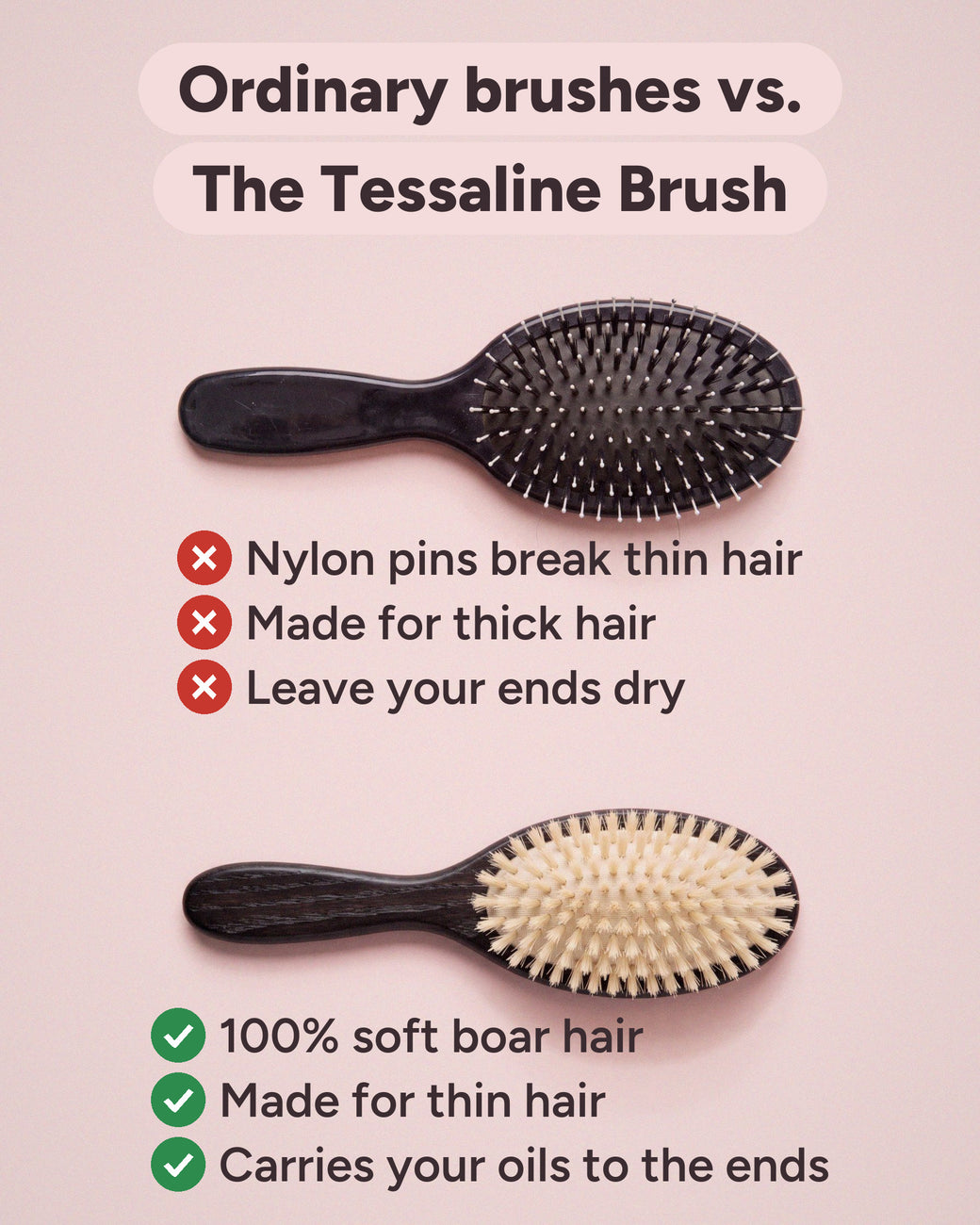
I asked the next client, and the next. Almost every woman with dry, brittle ends had the same kind of brush: hard plastic or nylon pins, made for thick, young hair.
In all those years, nobody had asked them about their brush. Not the beauty counter. Not even me.
What the beauty industry doesn’t tell you
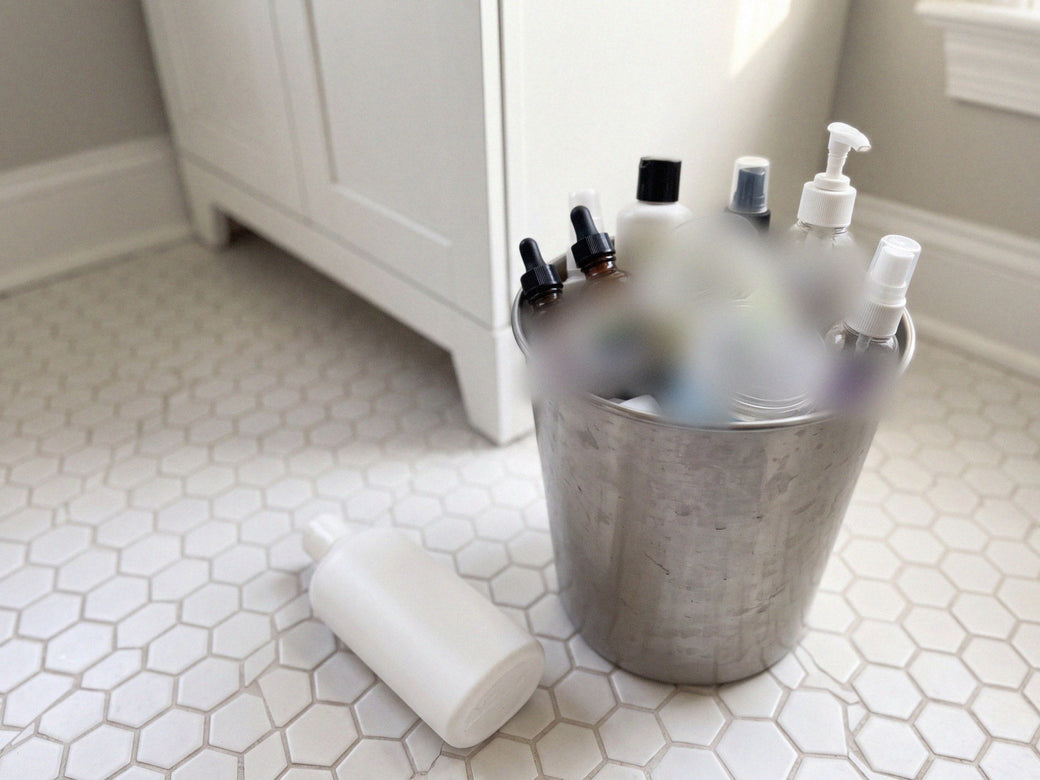
Look at the labels on your hair products. Almost every one says “use daily.” They were made to run out, so you’d come back for more.
One of my friends used to sell hair products for 15 years. When I told her about brushes, she laughed. “Everything I sold was made to run out, so that you would come back,” she said. “A good brush doesn’t run out. But nobody makes money telling you that.”
The hair vitamins she sold cost $79 a month. A good brush costs less than one month of them, and you only have to buy it once.
The 3 signs I look for now
You can check all three on your own hair.
Sign 1: short bits of hair on your brush and around the sink. Pick one off your brush and look at its root end. A hair that fell out on its own has a tiny white bulb there. No bulb means it didn’t fall out. It broke.
Sign 2: right after you brush, your hair looks worse. Frizz on top, ends poking out.
Sign 3: your roots look a bit greasy, but your ends are still dry and rough.
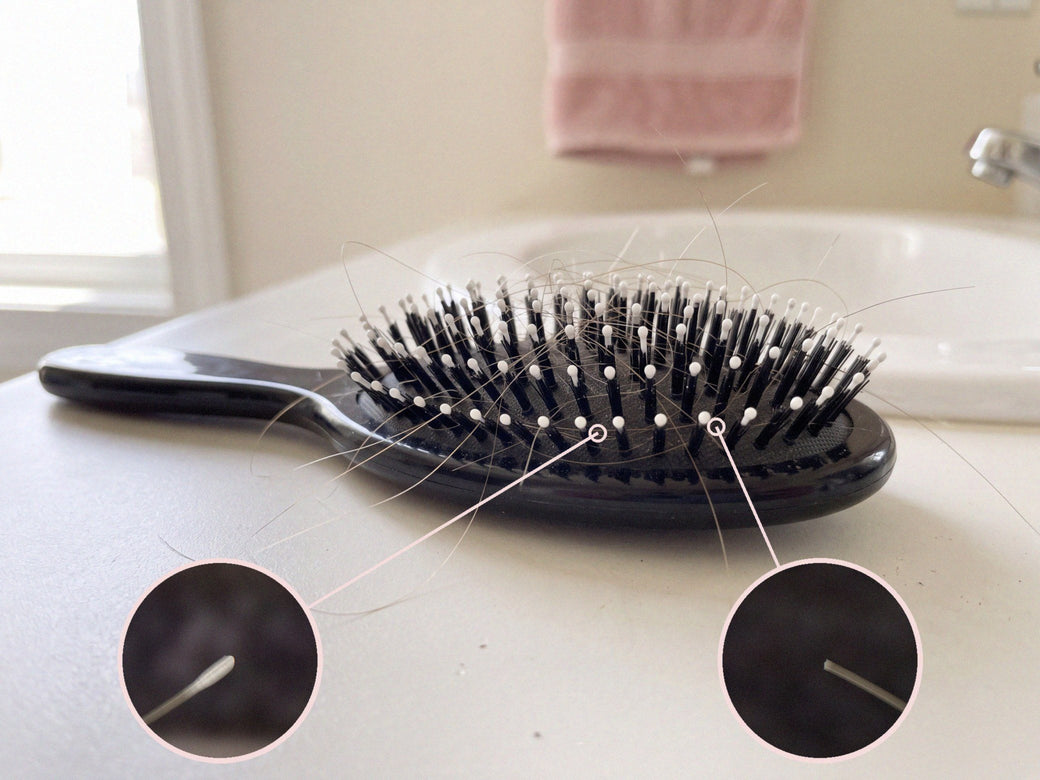
The first client I showed this to went home and checked. Nearly every hair in her brush had a broken end. For years, she had blamed her age.
What menopause changes, and what I see
According to Cleveland Clinic, during menopause you may notice your hair is thinner and less full. A 2025 review in the journal Maturitas says hormone changes around menopause can lower hair density. Strands can get thinner, and the texture can change. The hormone changes can begin up to 10 years before menopause.
That’s what the studies say. The rest is my own experience, not a study. What I see in my chair is that the scalp keeps making its own oil, even after menopause. To me, it’s the best conditioner there is. The question is whether it reaches your ends.
What doesn’t work
Serums, oils and masks coat the outside of the hair, and they wash out.
Hair vitamins and gummies, as far as I can tell, work at the root, on hair that hasn’t grown yet. It takes years before you can tell if they actually fixed your dry ends.
Cutting it short removes the damage for a while. Then the new ends meet the same old brush.
And boar brushes? Some clients tried one, and it scratched. Many are firm, made for thick hair, or mixed with hard nylon pins. On thin hair, a firm brush grabs, whatever it’s made of. Some brands even mix boar bristles with plastic bristles and never tell you.
It’s not just your age. It’s your brush.
The way I see it, your scalp’s oil has to travel down the whole strand, and something has to carry it. Plastic pins don’t. They leave it at the roots. That’s sign 3.
On hair that has grown thin, hard pins also grab. Some hairs break. The others puff up into frizz. That’s signs 1 and 2.
So every morning, the brush breaks a few more hairs. Your ends get drier, and another serum goes in the cart. The next morning, it starts again.
You were not doing it wrong. You were sold the wrong brush.
So what is the right brush?
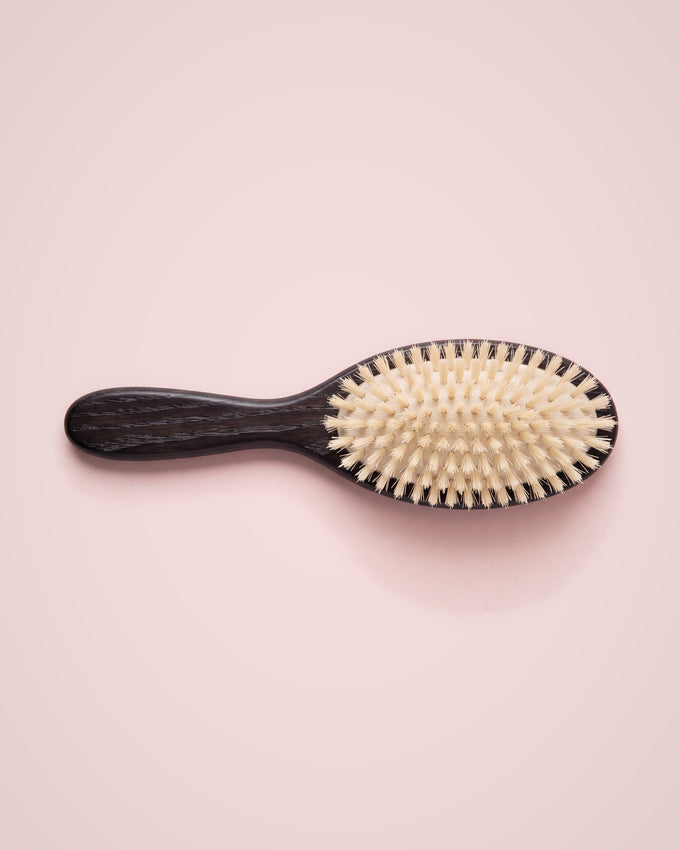
The one I use and lend at the salon now is the Tessaline Brush. Here’s why.
For thin, dry hair, a brush needs two things. First, it has to be soft enough to never grab, hurt or even break your hair.
Second, it has to do what plastic pins don’t: move your oil. Natural boar bristle takes it a little further down with each stroke.
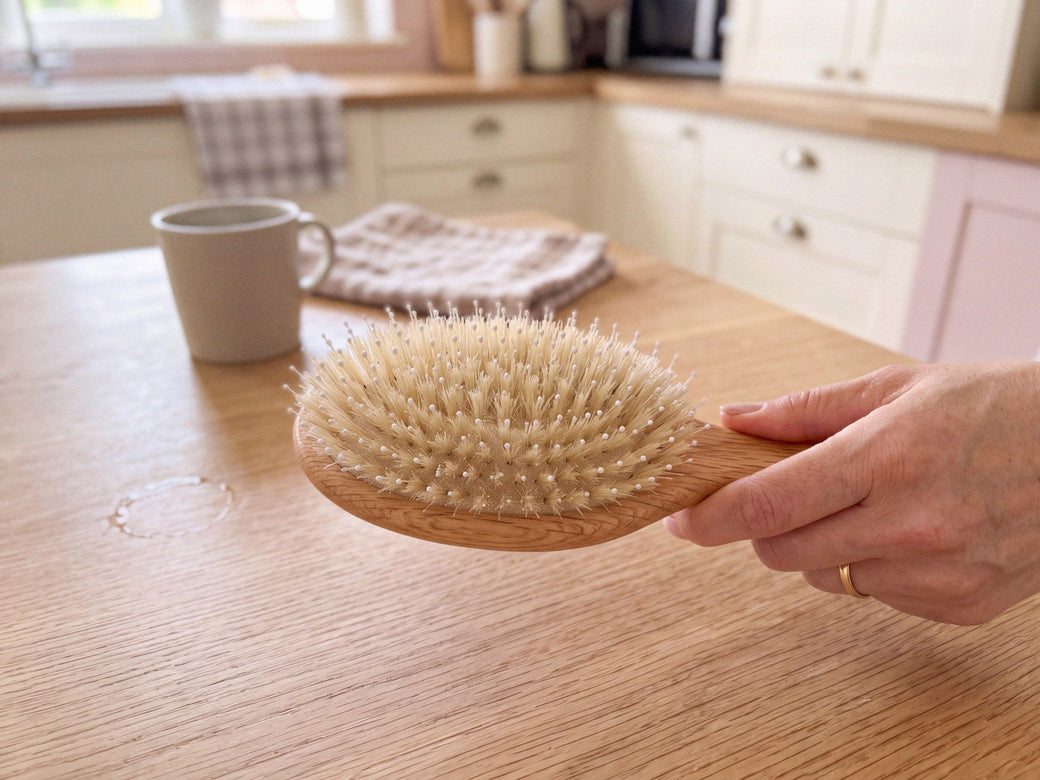
The Tessaline Brush is 100% soft boar bristle, with no nylon pins. The bristles sit on a soft cushion, on a dark wooden handle. It’s the brush I give to women with one kind of hair: thin, dry and fragile.
The first time you hold it, it may feel too soft to do much. That’s the point. It’s not there to pull.
Your dry ends get their shine back, and your hair feels soft and young again!
A 60-day trial in your own bathroom
Try it the way I’d test anything in my salon: at home, every night, on your own hair.
If it’s not for you, send it back within 60 days of delivery. Email hello@tessaline.co for the return address. Once it’s back, Tessaline refunds everything you paid, shipping included. The only thing you risk is the return postage.
Right now, Tessaline has a sale: 30% off one brush, free shipping, and 2 brushes are $119 instead of $198.
Here’s what I’d do. Choose your offer below. When the brush arrives, put the old one away. Start that same night.
- 1 Brush$59
Regular price $99Free shipping40% OFF - 2 Brushes$99
Regular price $198Free shippingSave $99
Free, fast delivery.
60-day money-back guarantee.
P.S. If your sister or a friend has been talking about a short haircut, send her this page first.
Sources: Cleveland Clinic; Gupta AK et al., Maturitas, 2025.